


9 Effective Tips for Promoting Your E-Commerce Outlet

9 Effective Tips for Promoting Your E-Commerce OutletYou’ve an e-commerce store that you wish to promote in the best manner possible in order to reach out to the maximum number of potential customers. You have taken all the necessary measures to make your online outlet optimized for e-commerce SEO. You may have already done all the homework for making the site friendly for Google’s web crawlers, including indexing the web pages, readying it for downloading quickly across digital handheld and desktop devices, and so on.

Now, in order to increase the flow of traffic to your e-commerce portal, you can make the most of the following e-commerce SEO techniques.

  1. Upload relevant and creative content about your product or service

Regardless of whether it is a product or service that you wish to promote, the best way to do so is to present the benefits and features of the same via creative and engaging content. Writing at length is perfectly all right as long as you are not beating about the bush. Not making the content keyword heavy is another aspect that you need to keep in mind.

  1. Have title tags that will titillate users to click on the same

Having an appealing title tag that will titillate the users to click on it is another useful e-commerce SEO   tip to bear in mind. Most of the time, you are so focused on the bigger picture in order to ameliorate your site’s search engine ranking that you tend to miss out on the seemingly inconsequential aspects.
For instance, a plain and simple title tag may not induce users to click on it as much as a catchy one.

  1. Go for versus posts

You can try the versus post strategy in case you are promoting two of the best selling products under a product category from your online store. In other words, you could create a post or blog comparing and contrasting the two products or write a piece where you review the products vis-à-vis other comparable products.

  1. Encourage bloggers to review your product

This is a tried and tested strategy but remains effective to this day. Look for bloggers who focus in your area and have them write reviews by offering them a free sample.

  1. Prefix or suffix the words ‘buy online’ to the title tag on the product page

Prefixing the words “buy online” or even suffixing the same to the title tag of products goes a long way in boosting meaningful traffic to your site. The probability of someone clicking on the product title tag is higher when you add those words.

  1. Write articles that serve as buyers’ guide

This e-commerce SEO tip is helpful for those who deal with a wide range of products of different brands. For instance, if you are selling salmon fishing hooks and related accessories, you could pick and choose from several keywords, germane for the items, like ‘different kinds of salmon hooks’ or ‘the best salmon fishing lines’.

  1. Take advantage of Schema Markup for positively reviewing product

If you wish to attract higher traffic from your current SERP position, you can take advantage of Schema markup for annexing reviews to every product page.

  1. Make the most of promotions

Devise a good promotional offer and publicize the same across all online platforms in order to make your product ubiquitous.

  1. Canvass newly launched products via reviews

SEO Jacksonville Company can help you out with your e-commerce platform promotion. Contact the firm at 904-425-9679 or log in at www.localseojacksonville.biz

Entrust Your Content Promotion Services to a Seasoned Online Marketing Company

Entrust Your Content Promotion Services to a Seasoned Online Marketing CompanyWhen it comes to promoting your site across the web with a view to boosting your business in the online realm, optimizing your portal for search engines (so that the site ranks on the first page of SERPs) is a sine qua none. Simply put, in order to make your site receptive to SEO or search engine optimization, you should follow specific prerequisites. For instance, the site should be designed in such a way that the same can be downloaded easily on handheld as well as desktop devices and at the same time, should be navigable or user-friendly.
Another important consideration for SEO is to create, upload, and promote original and pertinent content or creative content marketing in short. Effectively marketing the content in your site, be it textual or visual is as important as creating unique and relevant content, if not more. Unfortunately, a good proportion of companies and firms are unable to take advantage of this online campaigning technique, despite the ready availability of data on effectual content marketing strategies.

The truth is that popularizing the content is multiple times more complex and difficult than crafting meaningful content. No wonder then, businesses invest hugely for making content viral online, yet the same remains invisible to majority of those who browse on the net. In order to make the most of your content marketing plan, abide by the following tips.

1. Ensure that your content has an edge over your competitors’

If you hosted your site a long time back, you may be well aware by now that there are innumerable sites intensely competing for ranking on the first page of search results based on the same keywords that you are targeting. And the number of sites aiming for the keywords that you are after is growing with every passing day. So, how do you stay at least a step ahead of your competitors’ with reference to claiming a rank on the first page of Google’s SERP?

Of course, by scripting content that is more informative, more germane, and more enlightening compared to your closest competitors. Carefully go through the content of the first five sites on the search results’ first page to get an idea of what meaningful content is.

2. Specialize in the area you are concerned with

You could be dealing with stationeries or trying to sell distance education courses online. No matter whatever your business or occupation is, your chances of garnering an increased volume of traffic go up significantly if you earnestly attempt to specialize in your area. To put it in short, you’ll be able to do better business and stay ahead of your competitors’ if you can provide customers with something which your rivals cannot.

3. Have a roadmap ready

Just thrashing out a roadmap, or in other words, a content marketing program, and implementing the same cursorily is not enough. You should not only revert back to it more often but also adjust and reform it in accordance with the relevant data.

4.Publicize your content

For publicizing your content in the virtual world and magnifying its visibility, you can capitalize on email marketing, network with people who are in a position to spread your content, and reach out to influential personalities. Tapping the automated social media channels is another excellent way to promote content.

More often than not, firms and businesses seek professional help instead of banking on in-house employees for reaping the benefits of SEO. A firm or agency offering online web marketing services will be to ensure a steady flow of consequential traffic to your site.

Local SEO Jacksonville Company based in Neptune Beach, Florida offers result-oriented online promotion services. You can reach the firm by making a call to 904-425-9679.

Image credit: Suomy

Do Not Ignore Social Media Marketing For SEO

Do Not Ignore Social Media Marketing For SEOIt doesn’t take a genius nowadays to realize that social media is of utmost importance in building up one’s website traffic. Just focusing on keywords and links isn’t going to do it and that is why social media marketing is now one of the most important parts of SEO.

Why is social media so important? It’s because social media is the juggernaut by which the internet rolls. Social media has grown to such astronomical size, entire industries are now shaped and supported by it. The sheer number of people online is in the billions and will continue to grow. They rely on social media for googeneral communications as well as shopping, education, and courtships. There’s no area of our lives that social media isn’t attached to. That being said, knowing how to operate social media to your advantage to boost your SEO means a lot of work.

It’s going to take lots of effort to exploit the goodies offered via social media. It means not only signing up for each venue but having an active participation with thousands of other people. You need to target social media sites that contain the keywords to your site. There are several free and pay for tools for analyzing keywords and that is quite helpful. You can bet your top competitors are using these tools as well as ‘boots on the ground’ tactics.

You’ll not have to socialize 24/7 but you will have to spend some time daily if possible or your efforts will be totally useless. You’ll have to find Facebook pages that cater to your niche of business. There you will have to not bully your way in or spam these pages to death, but you’ll have to be a valuable member of that community. This can be fun with fun if you’re really passionate about your line of business. Let’s say for example you’re a plumber with a business in Hogjaw, Tennessee. Well, you’re looking for customers in not only that area but nearby areas. You would target plumbing sites and pages and especially pages with the town of Hogjaw, Tennessee in them. You’ll have your own social media pages up and running with links to your site and contact info. Location too as this helps with ‘Local SEO‘. On these associated sites, you’ll be a good member. Helping out when you can and being a general ‘great person’. Other members will appreciate you for your good nature and expertise. These people will share and like your content and put up links to your site adding to your linkbuilding goals. Linkbuilding is still a vital process for SEO.

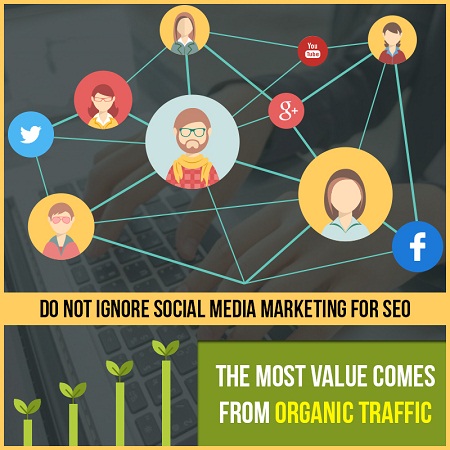
Actually, applying your social media skills will bring you a multifold of positive results. The most value comes from organic traffic that not only converts into sales but also retains the surfers for regular business. As people get to know you via social media they will continue to discuss you and your business. Just continue to be a helpful neighbor and you can’t help but go up in the social media communities, but your site will rise to the top of the search engines. Mind you, your social media personal business page has to have as much info about your business as possible. It might get ten times the traffic your main website gets, however, it will be sending you a continued stream of organic traffic which is what you want because your social media page will be considered ‘authority’ and that kind of site is of greatest value to Google. Your main site might not be in authority yet, but your social media page is and getting a link from any relevant authority site is a great ROI.

So as you can see, SEO nowadays needs social media and you do too.

Exaggerating Local SEO Content Could Backfire

Exaggerating Local SEO Content Could BackfireIt is crucial that you create original and relevant content for reinforcing local SEO but overdoing it could be counterproductive eventually. The time-honored axiom ‘the more, the merrier’ does not hold good in the local SEO realm. Waxing eloquent and taking a long-winded route to elucidate a topic or subject is a privilege available mostly to academics but in the dog-eat-eat world of e-commerce, exaggerating content for improving SERP ranking could backfire.
Of late, many businessmen and even some marketing gurus have started treating SEO and content as two sides of the same coin. All of a sudden, it looks as if the content has become the be-all and end-all of any and every local SEO campaign. Until and unless fresh pages are not uploaded on the websites, business owners are left with the feeling that enough attention has not been paid to SEO.

Proprietors and webmasters are relying on a mistaken premise if they assume that verbosity in content would be good for local SEO. Given the fierce competition that exists in the virtual world of trade and commerces your business could take a beating and you may lose clients if you continue with content overkill.

Pages devoted to local SEO usually do not add value

When it comes to buttressing local SEO, the strategy that is usually resorted to by marketers and business owners is to tag extra pages to the site, targeting specific locations in a city. Now, this technique could turn out to be effective if the appendage content is creative and germane but more often than not, this is not the case. The add-on pages usually become doorway pages typified by shallow content and are created chiefly to improve the site’s position on the ranking pages of the search engine.

It is Google, the world’s most admired search engine that defines such extra pages as ‘doorway pages’ and sites using this strategy are not favored by it. Since Google has been punishing sites harboring doorway pages since 2015, owners of such portals have had enough time to get their act together but of late many sites have gone overboard by appending doorway pages. What exactly is a doorway page?

If you’ve numerous pages on your site which are not listed on the ‘home page’ where each is dedicated to a particular city or location and have more or less the same content, then every such page is a ‘doorway page’. Google simply discourages the practice of adding on doorway pages with the expressed objective of improving local SEO ranking. Though the intention behind developing such pages may be commendable in theory, in reality, the end results are not good.

Clicking on any one or all the doorway pages takes the user to the same place which in the end could be frustrating for him or her. Therefore, if business owners are made aware of the futility of affixing ‘doorway pages’ to their sites, they’ll be able to frame a more efficient local SEO stratagem.

How many pages should you actually add?

Businessmen for the purpose of improving traffic to their sites will have to adopt an efficient technique with regards to reinforcing local SEO. Hence, proprietors would be eager to know about the exact number of pages they should be adding to their sites and how frequently should they conduct this exercise. Towards this end, it’d be appropriate to say quality matters more than quantity and so just adding 15-20 pages every month will not be fruitful.

To hit the nail on the head, you or your site would be doing better if you append 1-2 pages having inventive and original content, once in a month.        

5 Local SEO Tips for Boosting Up Your Business

5 Local SEO Tips for Boosting Up Your BusinessIf you thought that SEO or search engine optimization that used to be a sine qua none for businesses looking to boost their online sales was losing its edge, then think again. That SEO and SEMM promotional methods are still a force to reckon with can be gauged from the following statistic: Agencies manufacturing or marketing different products and services and having an online presence will be investing upwards of $79 billion in local SEO. So, if you have a storefront in a residential neighborhood or a retail outlet in your city’s CBD, then you’d be better off spending more on local SEO promotion for increasing the online visibility of your brand.

Following are some local SEO tips you can abide by for improving the popularity of your product or service across the Internet:-

1. Rich Answers

Many users and online shoppers searched for a specific product or service or browsed for info on a particular subject not by keying in keywords but by typing questions. The practice of browsing on the net by framing questions has now become an established trend. Google cemented its popularity as the world’s most favorite search engine by providing ‘Rich Answers’ to users and they don’t need to click on SERP results for getting the relevant info.

Info via ‘Rich Answers’ is furnished in the form of snippets, maps, sliders, tables, forms, and charts. If you own a bakery establishment and the business is cataloged in ‘Google My Business’ listings, users or consumers will be directly driven to your site when they’re looking for baked goods recipes.

2. NAP

Contrary to what you may think, NAP is not an esoteric acronym or abbreviation but simply stands for name, address, and phone number. Though it doesn’t need to be emphasized, providing this elementary info on your site is crucial as search engines consider NAP data when they embark on local SEO drives. Also, make sure that your NAP details are identical across all listings.

3. Reviews

Positive reviews can impact your site’s ranking during a local SEO initiative. If your product or service wins rave reviews across the different automated social media platforms like Facebook and Twitter, these will go a long way in boosting your ware’s popularity. However, it can be a challenge to encourage consumers to upload positive feedbacks or testimonials. You can begin getting in touch with your steadfast customers and requesting them to write their genuine opinions regarding your product.

4. Register your site on local business directories

You’ll be giving a good fillip to your business if you register the same on local business directories and yellow pages. At the same make sure that the NAP information you provide is consistent with the data already visible on other citations.

5. Smartphone friendly

People are increasingly using their smartphones for going online in order to complete a host of routine activities like shopping, researching for information, and so on. So, making your site smartphone-friendly is crucial if you want to stay in the competition.

Twitter: New Features Hint at Snapchat App Influence

Twitter: New Features Hint at Snapchat App InfluenceTwitter is, by all means, one of the most popular to-date social media apps that have taken the consumer market by storm, with millions of users and thousands or more signing up and using it’s service regularly. Twitter, however, much like other major social media sites has had its share of challenges in generating new users and popularity, given Facebook’s heavy advance on the consumer market, often taking other social media users by the ‘herds’.
Over the past year, Twitter has innovated several of its own unique, strategies in the form of features – most recently, the “Stories” feature which essentially grabs and compiles (or “stitches”) all your Tweets from the same day and presents it to your followers in a unique, organized, and thoughtful way.

However, Twitter’s most recent feature is perhaps likened to that of Snapchat’s, which allows it’s users to send temporary, “self-dissolving” pictures or video feed to its followers. Though, unique to its cause, it (supposedly) will also allow the original Sender to be notified whether or not recipients have viewed, ‘screenshot’, or shared their image or video. Though in all fairness, it can be considerably difficult, given today’s technologically advanced users to track ‘per say’ whether anyone has truly screenshot the image, or in the case of a video re-recorded it. After all, for every new “anonymous”, private, or self-deleting form of media there appears to be at least 5 to 10 different new programs that likewise are designed to, ironically enough anonymously capture the content.

Now, whether this new image/video feature by Twitter is truly a knockoff so to speak of previous Snapchat technology is difficult to say for certain. However, more often than not, social media sites, apps, and technology, in general, seem to often ‘hijack’ one another’s ideas. But, most people might simply consider this a form of innovative thinking, rather than actual theft or a lack of originality.

Image Credit: Mizter_x94

6 Tips for Local SEO That You Can Advantage of

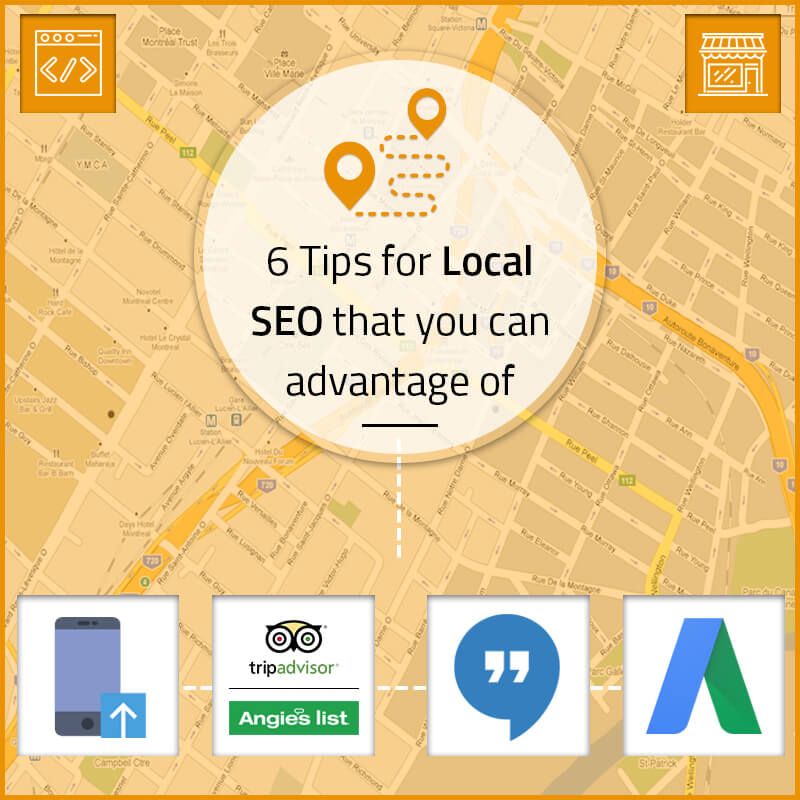
6 Tips for Local SEO That You Can Advantage ofThough the SEO landscape has come a long way and evolved tremendously over the years, its significance in the world of websites hasn’t diminished at all. SEO remains as relevant today as it was during the days when Google was steadily progressing to become the world’s most admired search engine. Google, in order to maintain its top position in the search engines’ listing, updated its ranking algorithms several times in a year.

The world’s top search engine still releases algorithmic updates for ranking countless websites secured on its servers, only the parameters have undergone change, a sea change in fact. For instance, updates to Penguin or Panda are more geared towards sites that are smartphone-friendly. More than 60% of those who log into sites (for completing a purchase or seeking relevant info) do so from portable digital devices, mostly smartphones.

Another factor worth noting is that the updates accord significant weightage to sites that are promoted by taking advantage of a local SEO strategy. If you have a business website, especially an e-commerce site whose SEO marketing technique doesn’t incorporate local or regional demographic, then chances of your site not garnering a good rank or even getting delisted from Google’s servers are quite high. So what tips should you follow to have an effective local SEO plan in order to attract niche clients for your business?

1. Register your site with Google My Business

The very first and foremost local SEO tip that you should make the most of is to register your business with Google My Business. You may have a state-of-the-art site that you claim to be user-friendly but it could be that the same is not visible to many individuals as it is not displayed prominently. Once you subscribe to Google My Business, your site’s name, business address and hours, reviews, and nearness to user’s location will be visible on the SERP (search engine ranking page) whenever a user makes a Google search of your firm.

Just go to the Google My Business to complete the registration or listing process.

2. It pays to have an interactive and smartphone-friendly site

Are you aware that majority of your present clients may have logged into your web-based outlet via their handheld PDAs, like smartphones and tabs? It is also very likely almost all your future customers will get in touch with you after visiting your site from their portable devices. If users or prospects face issues downloading and/or navigating through your portal on their mobile digital gadgets, they’ll not waste time in moving on to competitors’ sites.

So, if you haven’t yet structured your local SEO site to make it smartphone-friendly, then it’s high time you did.

3. Make local SEO listing consistently across the web board

In order to make your presence felt throughout the web world, you can choose to register with local indexing sites, besides Google. But before you proceed to enlist your business with such listing sites, you’d need to ensure that the NAP (name, address, and phone number) info is always provided. Additionally, make sure that this info is correct and identical in all the listings including but not limited to:-

  • Angie’s list
  • TripAdvisor
  • BBB (Better Business Bureau)
  • Bing
  • Yahoo
  • Foursquare
  • Yelp
  • Local commerce guilds and federations
  • Chambers of Commerce
  • Telephone directories, white pages, and yellow pages

4. Benefit from testimonials and feedbacks about your service

It has become the norm for businesses, both small and big to maintain separate profiles for the different social media platforms, including Facebook and Twitter. Customers, shoppers, and buyers of products and services are prone to offering a review or feedback on such automated social media sites at the drop of a hat. Refashion your local SEO in a way so that customers are encouraged to write a positive review about your product or service.

5. Target local ad extensions

Make the most of Google AdWords in order to publicize your business in the locality or neighborhood you’re located. Once you subscribe to Google AdWords, users will be able to know more about your business’s location that’ll give them the confidence to get in touch with you via a ‘call button’.

6. Develop content that’s relevant and location-based

Develop content that is original, meaningful, and relevant to your business. Also, make sure that the content is orientated towards the locals, and is tempered with names of streets, local news, events, and happenings.

How to Gain Local SEO Clients

How to Gain Local SEO ClientsProviding search engine optimization (SEO) services locally can be a very lucrative and rewarding job, but gaining new clients can also be quite a challenge, especially as you are just starting up. This is especially true when you are cold calling or walking into businesses blindly hoping to get their business. The first thing here is often an education component that you need to provide- you really need to create that value proposition for your business and your services and sell it in terms of why it is good for THEIR business or company.

There are often great information asymmetries and you will often find that potential clients have very little to no understanding of the web and how search engines actually work. Coupled with this, they may also not completely grasp the power of ranking well and getting organic traffic to their website. These are points for which you should really try to fill the evidence gaps. Usually, they will have only heard buzzwords if anything and you have to make sure that they understand realistically what can be and should be done

Your pitch is everything once you have your foot in the door. Practice it a hundred times and practice it again because it can literally make or break your business. A strong pitch can make even the ficklest of clients open-minded and open to your ideas.

The first thing that you need to master are the facts. If you do not know what you are talking about it will be clear as day. You have to have a smooth pitch in which you show confidence and understanding. Filler words like “um” and “like” have the opposite impact so you need to practice avoiding them. Furthermore, you should have an evidence-based presentation with data to back up any claims you make. You should also do some scenario planning for potential questions you might get and be prepared to answer those with any data you may have. Facts matter and people recognize that.

Beyond being confident and understanding the space (including competition, needs, gaps, etc.), it is important that you understand the particular client you are going to speak to. Now you will never have all of their information from the get-go, but you should do you due diligence and try to estimate what their needs are to the best of your abilities. Once you start your discussions, do not be afraid to ask for more information or ask if your assumptions about their business are correct. The more relevant and focused the presentation is to their business, the more effective it can be. To do your background before you go in, use tools like MozLocal Listing, SEMrush, and other local listing vendors to see how your potential client currently fares and who their major competition might be. From there try to cater a presentation which hits on the primary points of your findings and helps them improve relative to their competition. Local SEO can be a tough sell, but once you show that you can help them gain customers over their competition, they will be on board.

Everything You Need to About Online Reputation Management

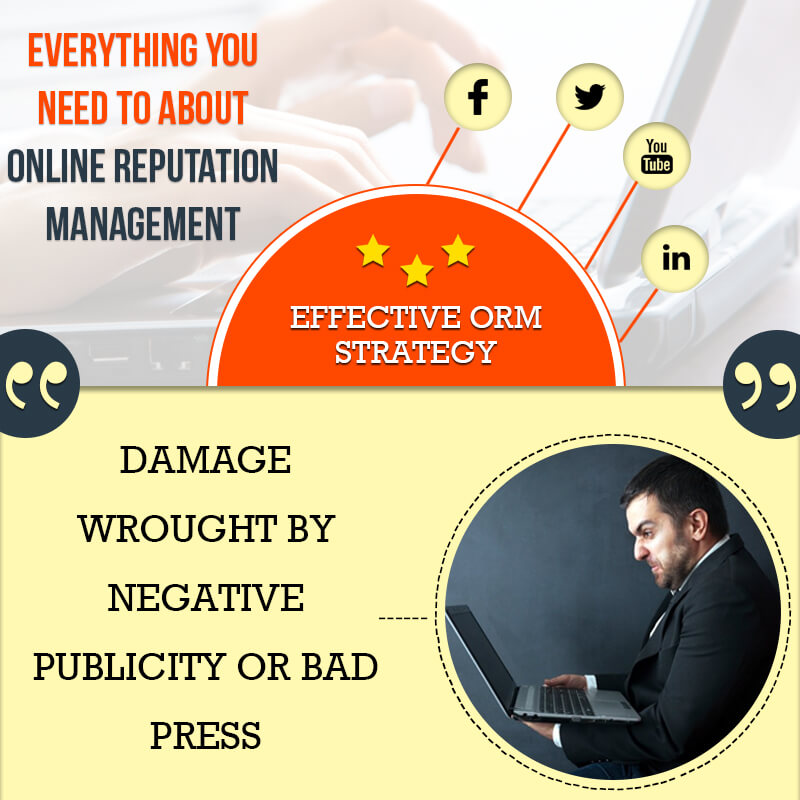
Everything You Need to About Online Reputation ManagementOnline reputation management is an effective remedial or corrective technique that businesses, both big and small, take advantage of in order to brush their images (tarnished by the bad press) on search engine’s SERPS. ORM as a quick fix for tackling negative publicity on the web can be smoothly integrated with your company’s SEM or SEO strategy. Negative or destructive feedbacks, comments, and blogs (and sometimes entire sites) about a product or service posted by anonymous complainants/users on automated social networking sites brings down it is ranking on Google.
Damage wrought by negative publicity or bad press

Grievances voiced by users of a brand (looking for a shallow alibi to vent their complaint) on Facebook or Twitter have the potential of going viral, eventually besmirching the manufacturer’s or service provider’s online reputation. The cloak of anonymity offered by social networking sites encourages and emboldens subscribers to air their accusations regarding a brand which can reduce the firm’s or entrepreneur’s earnings. Those posting malicious or off-putting comments rarely reveal their actual names or addresses rendering it next to impossible for the affected firm to trace the source and address the grievance.

If you or your company has been victimized by bad publicity, you’re the ideal candidate to opt for an online reputation management damage-control exercise. But before you do, you should apprise yourself of the extent of the undesirable impact that negative publicity or bad press can have on your or your brand’s online status.

ORM: Striking before it starts to hurt

When it comes to getting an online reputation management action plan underway, most companies adopt a reactive strategy. By the time the ORM campaign starts delivering, a considerable damage has already been done as the highly ranked sites or web pages act as breeding grounds for inbound links. Muffling the top ranking pages littered with unconstructive comments becomes all the more difficult as the inbound links further reinforce the ratings of the pages.

On the other hand, an ORM promotion that takes a preemptive and proactive approach is highly successful in thwarting bad press from gaining ground and becoming viral. Such a hands-on ORM strategy is devised in a manner that it is extremely effective in monitoring the top-ranked organic standings. A constructive ORM plan should be able to preempt negative publicity and shield the company from the damaging feedbacks of perverted customers and frustrated employees.

Stemming bad press with ORM

Popular search engines including Google, Bing, and Yahoo index and rank web pages or sites based on specific SEO algorithms.  Individuals who’re well versed in creating negative remarks are aware that posting the comments or blogs on high-ranking blogs will publicize the same across the social networking platforms. As a result, when or whenever anybody browsers on the net to find out details about your business, they’ll mostly see links badmouthing your firm. Reverse SEO is an excellent online reputation management technique that can help you obliterate the negative publicity placed on the top URLs in the first SERP.

What is an effective ORM strategy comprised of?

Online reputation management, very much like SEO exploits a multi-faceted strategy so as to safeguard your company’s reputation across the web. An effectual ORM plan first targets exactly those web pages or sites where the maximum bad press regarding your firm is abounding. In the next stage, these websites and pages are scrutinized based on their ranking status.

Once you’re aware of the ranking parameters that these sites have exploited to clamber to the top, you’ll be in a position to use the appropriate tools and/or techniques to remove the links from the sites. In the third and final step, you’ll be taking advantage of the relevant tools such as profiles on social media, bookmarking programs, PRs, and a bevy of newly launched blogs or sites.               

Making Order Out Of Chaos The SEO Way

Making Order Out Of Chaos The SEO WayIn the rush to get a website up and running, marketers and webmasters often overlook the simplest things or the most important things that make a website successful. Then, down the road, they end up in confusion as to what to do and how to solve the various problems that keep their webpages in the lower search engine results. This is where a good analysis, objective, and impartial analysis comes in and no ego tripping allowed.

Believe it or not, that is one of the biggest factors in why some websites go south. Because of ego tripping. Somebody swears up and down that they know everything about web mastering, or they hired their spouse or boyfriend or girlfriend or even kids to design their sites and if anyone comes along and says their sites are rotten, they go into a fit and want to practically destroy their own online business. You have to put your egos on the sidelines. A website is only as good as its webpages since Google doesn’t list websites, but webpages. That means each webpage has to be optimized to professional standards, especially the way Google likes them.

The first step is that awfully painful impartial and objective analysis. Hire someone or if you do have colleagues or friends who are real webmasters, have them do the analysis. Tell them to pull no punches and give it to you straight. If they tell you the graphics your wife did suck, then get better graphics done. If you’re told your videos look like something from a 1940s war documentary, then get new videos made. The same thing goes triple for a copy. Do not have a rotten copy on your site that’s packed with keywords, keyphrases, and key groups. It’s just spammy and Google will penalize you for it. Google’s new software is very sophisticated and has started the industry with its superior ability to separate the chaff from the wheat. This means making sure your pages are pro level or no level.

Speaking of keywords, nowadays you don’t have to use some complex keyword strategy. Just have copy and tags that are natural as well as variations where applicable. Google’s algorithms will know what your site is about by reading the entire webpages and your keywords are listed automatically. The challenge is if you’re using keywords that the top sites are using. That competition is monstrous and difficult to defeat except if you’ve got some edge, some proprietary named product that no one else has the authority to use. In that case, just don’t worry, you’ll top out for those keywords with no sweat. The on page optimization and natural keyword use will speak for itself.

Your copy is your lifeblood here. You’ll need at least 10 to 20 good articles about 1,000 words each. Google likes the longer authoritative articles as they’re hip to spam sites that use only 300-500 words. That small word count is a red flag to Google that you’re trying to use SEO to gain an irresponsible advantage. This means you have to hire writers who are professional and you’ll have to pay that extra amount. Don’t try writing mills or software or any shortcuts. Google will know and if they detect anything screwy they will penalize you. With your pro level copy, you’ll need some link building too but you just can’t slap any links there. The links have to be relevant and from authoritative sites. The bottom line here is that your copy has to describe your site, provide usefulness to the surfer and be professionally written.

Now that you’ve got your site analyzed and ready to rock, you’ll need two more things often overlooked, mobile friendly and social media effectiveness. This means using some of Google’s mobile-friendly tools to make sure your webpages look good and function on mobile devices. Let there be no mistake about this. Your social media presence can be of major effectiveness and calls for a lot of work. You just don’t slap up a Facebook page and hope for the best, you want to engage the social media audience like a friend, a good mentor, and that will lead them to your webpages and any upsells or subscriptions you’ll want. This will be that organic traffic that you just can’t beat.